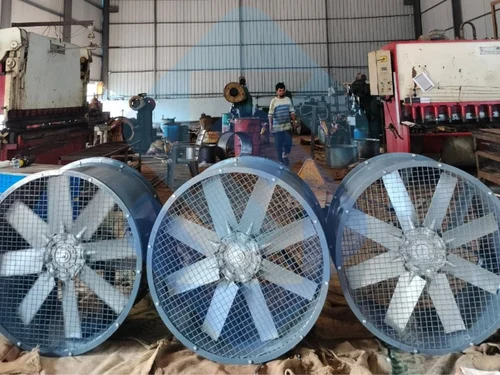
Industrial and commercial spaces generate more than just productivity. They also produce heat, airborne dust, smoke, and harmful fumes that can quickly turn a workspace into an uncomfortable and unsafe environment. Whether it is a workshop, warehouse, manufacturing plant, or processing facility, proper airflow management is essential. One of the most effective tools for handling these challenges is the axial flow fan. When chosen correctly, an axial flow fan becomes a powerful solution for maintaining air quality, protecting equipment, and creating a more comfortable environment for workers.
The Role Of An Axial Flow Fan
An axial flow fan moves air parallel to the axis of the fan blades. This design allows large volumes of air to be moved efficiently over relatively low-pressure differences. Because of this, axial fans are widely used for ventilation, cooling, and extraction in large spaces.
Their ability to deliver high airflow rates makes them ideal for situations where heat, dust, and fumes build up quickly. Instead of letting contaminated air stagnate, these fans continuously replace indoor air with fresh outside air or push polluted air toward an extraction system.

Reducing Excess Heat In Industrial Spaces
Heat buildup is a common problem in industrial environments. Machinery, lighting, and production processes all contribute to rising temperatures. When heat accumulates, it affects worker comfort, reduces productivity, and can even impact equipment performance.
A properly sized axial flow fan helps remove hot air and draw in cooler air from outside. This constant air exchange lowers overall room temperature and prevents heat from concentrating in specific zones. In large facilities, multiple fans can be positioned strategically to create a balanced airflow pattern that eliminates hot spots.
Businesses frequently decrease their dependence on air conditioning by enhancing ventilation, which results in reduced energy expenses while simultaneously ensuring a secure work environment.
Controlling Dust Before It Becomes A Hazard
Dust is more than just a cleanliness issue. In many industries, airborne dust can pose serious health risks, reduce visibility, and increase the chance of fire or explosion in certain environments.
Axial flow fans assist in dust control by keeping air moving and directing particles toward filtration or extraction systems. Instead of settling on surfaces or remaining suspended in the air, dust is guided out of the workspace more efficiently.
When combined with dust collection equipment, these fans help maintain clearer air, reduce the load on filters, and support compliance with workplace health and safety standards. Workers benefit from improved breathing conditions, and equipment stays cleaner for longer.
Managing Harmful Fumes And Vapours
Fumes from welding, painting, chemical processing, or fuel combustion can quickly become dangerous without proper ventilation. These airborne contaminants often carry toxic substances that should never accumulate in enclosed spaces.
An axial flow fan plays a key role in fume extraction systems. It pulls contaminated air away from the source and moves it toward exhaust points or treatment units. This continuous removal of fumes reduces the concentration of harmful substances in the breathing zone of workers.
Proper ventilation not only protects employee health but also helps businesses meet environmental and regulatory requirements. In many applications, axial fans are installed as part of a larger extraction system designed specifically for fumes and vapours.
Choosing The Right Fan For The Job
Not all axial fans are the same. Selecting the right one requires careful consideration of airflow requirements, space size, and the type of contaminants present.
Airflow capacity, usually measured in cubic meters per hour, must match the volume of air that needs to be moved. A fan that is too small will struggle to keep up, while an oversized unit may waste energy. Blade design, motor power, and mounting position also influence performance.
Durability is another important factor. In dusty or corrosive environments, materials and protective coatings should be chosen to withstand harsh conditions. Working with a specialised supplier can help ensure the fan is properly matched to the application.
Strategic Placement For Maximum Effect
Even the best fan will underperform if it is not installed in the right location. Placement should encourage smooth airflow across the entire space rather than short-cycling air in one area.
Wall-mounted or roof-mounted axial flow fans are commonly used for extraction, pulling hot or contaminated air out. Intake openings on the opposite side of the building allow fresh air to replace it. In some cases, fans are installed in ducts to target specific zones where heat or fumes are concentrated.
A well-designed ventilation layout ensures that heat, dust, and fumes are continuously pushed away from work areas and out of the facility.
Long-Term Benefits For Safety And Efficiency
Investing in the right axial flow fan delivers more than immediate comfort. Over time, improved ventilation reduces wear on machinery, lowers maintenance caused by dust buildup, and creates a healthier workplace.
Employees working in cooler, cleaner air are less likely to experience fatigue or respiratory irritation. This can lead to fewer absences and better overall productivity. At the same time, efficient airflow supports compliance with occupational safety standards and demonstrates a commitment to worker wellbeing.
Final Thoughts
Heat, dust, and fumes are unavoidable in many industrial and commercial environments, but they do not have to compromise safety or performance. With the right axial flow fan, businesses can control airborne contaminants, improve comfort, and maintain a cleaner, more efficient workspace. Choosing the correct fan size, design, and placement transforms ventilation from a basic requirement into a strategic advantage. In demanding environments, that difference can be felt every day in both air quality and operational success.